Designing Heartfelt Tributes: The Father's Day Questionnaire
Capturing the unique bond between a father and child requires more than just a generic card; it demands a thoughtful approach to visual design and content structure. The Father's Day Questionnaire Interior serves as a prime example of how editorial design and personal storytelling intersect to create a lasting emotional impact. For graphic designers and creators, understanding how to lay out these personal narratives is key to producing high-quality, sentimental products that resonate deeply with audiences.
The Role of Visual Hierarchy in Sentimental Design
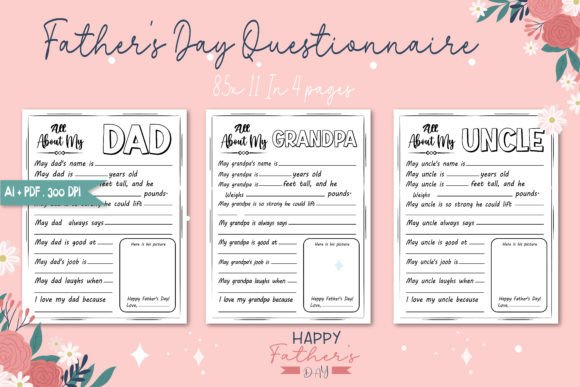
When designing the interior of an "All About My Dad" or "We Love Our Father's" document, the primary goal is to ensure the content is accessible and engaging. This is where visual hierarchy becomes essential. The questionnaire format relies heavily on typography to guide the reader’s eye from the prompt to the handwritten answer. By utilizing a clean, readable font for the questions and leaving ample white space for responses, designers create a balanced layout that respects the personal nature of the content.
Effective layout design ensures that the final product is not only beautiful but functional. Whether the design is intended for a digital PDF download or high-resolution print, maintaining a consistent grid system ensures that elements align perfectly across multiple pages. This consistency is crucial for building a professional presentation, even in a casual, family-oriented context.
Practical Applications and Creative Assets
The utility of a well-designed Father's Day Questionnaire extends beyond a simple keepsake. In the realm of digital marketing and content creation, these assets serve multiple purposes for businesses and individuals alike:
- Digital Products: Designers can create editable PDF templates that allow customers to type directly into the fields or print them out, offering versatility in usage.
- Social Media Graphics: Elements from the questionnaire, such as favorite quotes or memories, can be extracted and formatted into shareable social media graphics, driving engagement during the holiday season.
- Brand Identity for Stationers: For stationery brands, the questionnaire is a core product. The design must align with the brand’s broader aesthetic, using a specific color palette and typography that reflects the brand's voice.
- Editorial Design: Similar layouts can be adapted for family magazines or blog content, serving as inspiration for readers looking to document their family history.
Tips for Selecting and Evaluating Design Elements
When creating or selecting a Father's Day Questionnaire template, several factors determine the quality of the final output. A professional graphic design perspective prioritizes usability alongside aesthetics.
- Scalability and Resolution: Ensure the design assets are vector-based or high-resolution (such as 300 DPI for print). This guarantees that the layout remains sharp whether viewed on a mobile screen or printed on standard 8.5" x 11" paper.
- Compatibility: The best templates are fully editable, often created in software like Adobe Illustrator, InDesign, or Canva. This allows for easy customization of colors and fonts to match specific user preferences.
- Readability: Avoid overly decorative fonts for the main body text. While script fonts work well for headers like "We Love Our Father's," the actual questions must be legible to ensure the recipient can easily read and answer them.
Ultimately, the success of a Father's Day Questionnaire lies in its ability to facilitate a connection. By applying principles of visual communication and UX design, creators can produce documents that are not only visually pleasing but also intuitive to use. Thoughtful design choices—such as the spacing between lines or the weight of the typography—transform a simple questionnaire into a cherished family heirloom. Investing in high-quality creative assets ensures that the message of love and gratitude is delivered with the professionalism and care it deserves.