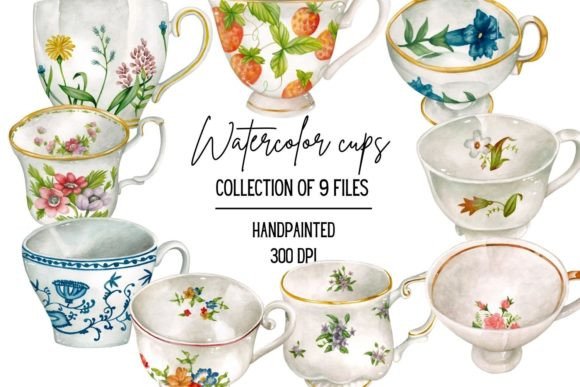
Watercolor Porcelain Cups: Elevate Your Design with Artistic Flair
In the realm of graphic design, the right visual asset can transform a project from ordinary to extraordinary. Imagine infusing your work with the delicate, hand-painted elegance of watercolor porcelain cups. These illustrations offer a unique blend of classic artistry and modern versatility, providing a sophisticated touch that resonates across diverse creative applications. For designers and creators seeking to add a layer of refined charm, high-quality, ready-to-use assets like these are invaluable tools for crafting compelling visual narratives.
The Artistic Value in Modern Visual Design
Watercolor illustrations, particularly those depicting elegant objects like porcelain cups, bring an organic, tactile quality to digital and print projects. This style taps into current design trends that favor authenticity, handcrafted aesthetics, and softer color palettes. In an era dominated by flat design and sharp vectors, watercolor elements provide a refreshing counterpoint, adding warmth, depth, and a human touch. They excel at creating an emotional connection with the audience, making them perfect for projects where storytelling and atmosphere are key. The transparent background of these specific PNG files enhances their utility, allowing seamless integration into any layout without cumbersome editing.
Practical Applications for Creative Professionals
The versatility of a set like this makes it a powerful component of any designer's toolkit. Here’s how these assets can be strategically applied:
- Branding and Logo Design: Incorporate a watercolor cup motif to create a distinctive brand mark for cafes, artisan bakeries, lifestyle blogs, or luxury wedding services. It establishes a memorable brand identity that feels both elegant and approachable.
- Marketing and Social Media Graphics: Use the illustrations in digital ads, email headers, or Instagram stories to capture attention. Their artistic quality stops the scroll and elevates the perceived value of a promotion or announcement.
- Editorial and Web Design: Enhance blog posts, website hero images, or magazine layouts with these decorative elements. They contribute to a strong visual hierarchy, guiding the reader's eye and breaking up text-heavy sections.
- Packaging and Print Design: Apply them to product labels, thank-you cards, or wedding invitations. The high-resolution, 300 dpi PNG format ensures crisp results in print, crucial for professional presentation and packaging design.
- Digital Products and Merchandise: Create printable art, pattern designs for fabrics, or elements for digital scrapbooking kits. The creative assets can be resized and recolored to fit a multitude of product themes.
Tips for Effective Integration
To maximize impact, consider these principles when using illustrated assets:
- Maintain Consistency: Ensure the watercolor style aligns with your overall color palette and other design elements. A cohesive look strengthens brand identity and improves user experience.
- Respect Visual Hierarchy: Use the illustrations to support, not overwhelm, your core message. They work beautifully as background elements, accent graphics, or focal points, depending on your layout goals.
- Test for Scalability: While these files can be resized, always check clarity at your intended output size, especially for large-format print or detailed UI design components.
- Pair with Complementary Typography: Choose fonts that echo the elegance or whimsy of the watercolor style. Serif fonts often pair well for a classic feel, while clean sans-serifs can create a modern contrast.
Thoughtful design is about selecting elements that communicate not just information, but feeling and quality. Investing in high-caliber creative assets like these watercolor porcelain cup illustrations is an investment in the effectiveness and beauty of your work. They provide a shortcut to achieving a polished, professional aesthetic that captivates audiences and elevates any project, proving that the right visual detail can make all the difference in successful visual communication.